«Write down the thoughts of the moment.
Those that come unsought for
are commonly the most valuable.»
Francis Bacon
Generated ideas are fleeting and fragile — unless they are externalized quickly, they degrade, mutate, or vanish. That is simply a consequence of limited working memory and attention. Ideas are especially vulnerable when the context changes — e.g., entering another room, when we are interrupted, or when further ideas arise. Even later reconstruction often produces only plausible but inferior versions — if the moment is remembered at all.1
For this reason, many people capture ideas, e.g., a journal next to the bed, a notes app for quick one-handed notes while walking, an idea file on the computer that opens quickly, a sketchpad within easy reach, or voice memos on a smartwatch or smartphone.
Your capture system may be memory-based or externalized, intentional or accidental, but it determines how many of these ideas remain available for creative work.
Capturing is the intake valve of the creative system.
While some larger ideas can be remembered — e.g., that one project you always wanted to do — many supporting ideas are easily forgotten. Once captured, however, they can be collected (see page 129), allowing even large creative projects to gain enough mass to be realized. You also stop being at the mercy of an unreliable memory.
Because capturing is itself a form of Externalization, it can generate further ideas (see page 103). As a Structure mode, it also imposes order on raw material. It frees resources that would otherwise be needed just to hold the idea in mind, making it easier to generate further ideas, flesh them out, revisit older ones, or take a different branch. Even bad or currently unviable ideas can become the basis for better ones. Captured ideas can always be evaluated and discarded later. Forgotten ideas that were never captured usually cannot be recovered.
If you have never externalized your ideas systematically, the effect is easy to test by doing it for a month. A comparison with what you had before might reveal a striking difference.
Fast, Easy, Available, and Usable Later
A capture method only works if it satisfies four requirements at once — it must be immediate, effortless enough to use in the moment, available in the moment, and clear enough to remain usable later.
Optimizing one at the expense of the others usually breaks the system.
Immediate Capture
The chance to capture an idea declines quickly. Thus, the capture method must be immediately available (low latency), ideally within less than five seconds. The main exceptions are specific Ideation Modes, e.g., Internal Simulation or Emotional-Motivational Ignition, where early externalization may interrupt the mode prematurely.
In any case, ideas must be captured before the context changes. These context changes are often underestimated. Returning from the toilet to the desk and seeing new e-mails can be enough to wipe an idea away. Driving home, entering the house, and being greeted by wife and children can do the same.
So capture them before crossing a threshold.
Effortless Capture
Ideas often arise when motivation is low, e.g., during relaxation or while falling asleep, time is short, e.g., at work, or options are limited, e.g., on the move. Thus, the capture method must be as effortless as possible in the given context.
For example, a notepad with a pen on the desk is almost effortless and immediately available. You just pick up the pen and write. If you had to get a journal out of your bag in another room, it would already be more effort and less immediate. If you had to get your laptop from that bag and sketch with it, the effort would be even higher and require extra decisions, e.g., which app, how to name the file, etc.
Crucially, capture methods should never rely on motivation. Motivation varies like a wave over time (see Figure 9). You never know how high it will be when an idea strikes, and chances are it will be low — especially for discovery-engine ideas. Motivation is also distorted by the assumed value of the idea, which can easily be misjudged, e.g., being very tired and deciding «the idea is not that important». Ease of capture should therefore compensate for low motivation.2
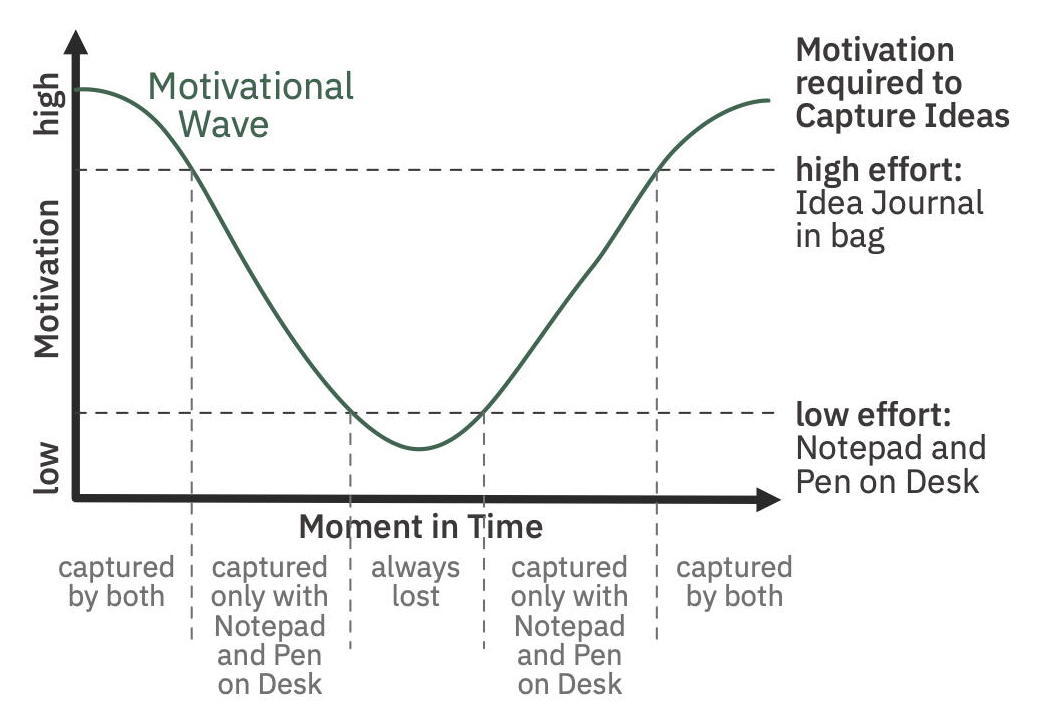
Figure 9: Motivational Wave and Capturing Effort.
Even a low-effort tool will still miss some ideas, e.g., when dead tired, but it will catch many ideas during low motivational waves that a high-effort tool would miss (see Figure 9). Relying on effortful capture methods means depending on high motivation — and thus losing many ideas due to «too much effort», «not in the mood», or «too tired».
Effort includes both physical and mental demands.
The physical demand is shaped, among other things, by how much movement is required (e.g., doing audio notes with a smartwatch on the wrist while half-asleep vs. using a smartphone that is on the nightstand), and by whether the tool is physically usable at all (e.g., a smartphone can be used one-handed while walking with an umbrella or coffee in the other hand — notepad and pen usually require two hands).
The mental demand is shaped by the number of decisions required (e.g., a digital file that needs to be named and suggests formatting vs. a paper notepad where you just write), and by the felt cost of capture (objective and subjective; e.g., a pristine expensive notebook can create reluctance to record low-quality ideas, whereas a cheap notepad invites use).
Because even deciding whether to capture an idea, or which tool to use, creates cognitive load, the default should be to always capture ideas in a default tool. The only criterion is that the idea feels crisp enough to preserve, whether it is a simple thought, an inspiration, an insight, an early unformed idea, or an apparently bad one. Evaluation can happen later, and if too much noise is captured, the filter can always be tightened.
Availability
Availability includes it being physically present where ideas occur (e.g., water-resistant paper works in the shower — digital devices usually do not), being socially acceptable in that context so it can actually be used (e.g., notepad and pen at a classical concert — smartphone less so), being organizationally compatible by not interfering too much with the ongoing activity and allowing easy return to it (e.g., while working at the PC, an idea text file can be opened without much interruption — switching to a paper journal less so), and being usable without risk (e.g., voice notes while driving — writing notes does not).
Capture That Is Understandable Later
To be useful, future-you must be able to understand what was captured. That sounds trivial, but many ideas are lost because handwriting is unreadable, audio is unclear, or context was not preserved. In some cases, the idea never really enters the system because the situation that made it meaningful is gone or the connection to a project is missing (see Preserving the Essence of the Ideas on page 118).
Thus, capture does not have to look good, that would also slow it down too much — but it does have to remain understandable. The simplest way to ensure this is to check and correct the record shortly after capture and move it into the collection quickly (see page 121).
Trade-Offs
These requirements pull against each other. A method can be extremely fast but too cryptic to be useful later, or very complete but too effortful to use when the idea actually appears. The aim is not perfection on one dimension, but a workable balance across all four.
At its best, capturing the idea is faster and easier than deciding to do it later.
Once capturing is structured this way, it becomes second nature, much like Generating Ideas (see pages 95). Ideas are almost always caught, and even bad ideas can become the basis for better ones.
Preserving the Essence of the Ideas
Ideas take different forms — sparks, insight flashes, structural ideas, emotions, emotional insights — and this determines what has to be captured if they are to remain useful later. What matters is that the idea’s essential aspects are preserved in a form that remains usable.
Ephemeral Content (Sparks, Shower Thoughts)
These are often isolated ideas, and without much reference they dissolve quickly. They therefore have to be captured immediately. If they arose from associative drift, capturing them while staying in the moment preserves the drift. Evaluating, reflecting, or trying to force further ideas kills it.
This content can take the form of:
- Micro-Associations: Tiny, fragile links the mind forms spontaneously, e.g., «goals as river deltas».
- Subtle Observations: Things that do not feel important yet, but are seeds of larger insights, e.g., «customers do x after y».
- Sensory Impressions: Hard to notice unless one listens inward, e.g., «steam is orange in morning sun».
- Idea Echoes: Related material that appears after the first capture and can lead to real depth if caught, not forced.
Insight Flashes
These are sudden recognitions of a pattern, often not yet fully formed. They are highly fragile because several threads in the mind connect only briefly before coherence starts to decay. Here both the insight and the structure it rests on matter.
If the architecture behind it — connections, tensions, ordering of implications, emotional salience — is not captured as well, the insight often loses force later.
Structural Ideas (Forms)
Because their internal relations are more stable, these ideas usually last longer, but they still dissolve if not externalized.
They can take forms such as:
- Shapes of Ideas: For example, «this could be a trilogy».
- Problem Formulations: Often representational shifts, e.g., «Why X and not Y?» — they need quick capture because they easily mutate.
- Constraints: For example, design principles such as «the UI needs agency, not simplicity».
- Contradictions: Pressure points requiring a third solution, not errors per se, e.g., «privacy and connection».
- Creative Questions: Starting points for later ideation — the question matters more than any immediate answer.
- Partial Structures: Fragments, loose clusters, or bits that do not yet belong anywhere, e.g., a few lines of dialogue.
Emotions
Emotional content comes with a felt quality — e.g., impressions such as mood, texture, emotional temperature, sensory fragments, symbolic resonance, bodily sensation, meaning, or tone.
The aim is to preserve the emotional richness, atmosphere, texture, or emotional logic so it can later be used in a work.
For example, «Sunset. Orange bleeding into violet. Cool air on eyelids. Distant dog bark. Sea-salt smell. Slow warmth in chest.». Voice memos are useful here because they preserve the emotional timbre of the voice.
The risk is flattening. Capture can easily reduce the experience to a tidy narrative, facts, or interpretation, all of which feel cold (e.g., «The sunset was beautiful. Orange sky. Felt peaceful.»). Narrative drift makes the memory more coherent but less raw — affective decay weakens intensity unless it is stored in a more multimodal form.
Emotional Insights
These are emotions that matter primarily for self-understanding. To remain useful, the important thing is not just the insight itself, but why it mattered: What it felt like, why it was compelling, what it pointed to, and what action tendency it contained. This translates emotional realization into something more stable, actionable, and re-triggerable.
Capturing it this way preserves the part that would otherwise be rewritten by the calmer, more controlled self. It does not require acting on it.
Useful forms include:
- procedural encodings: If–then rules, e.g., «If I get stressed, then I pause and ask myself X».
- environmental cue placements: For example, post-its or objects.
- behavioral rehearsals: Imagining oneself doing it.
- value alignments: Linking the insight to identity or goals.
These insights can take forms such as:
- Strong Emotional States that are highly fleeting — once the state ends, meaning fades, defensive rationalization returns, and urgency is lost.
- Motivation Traces that require capturing why the idea mattered, what it made you feel, and what felt alive.
- Shadow Ideas — wild, chaotic, or «dirty» ideas that can feel exposing, but often carry strong creative potential and require private capture and the understanding that idea ≠ identity or agreement.
Connection to Idea Collection
Capturing is different from collecting. At the moment of capture, ideas are often still forming and not yet clear enough to place inside a structured collection. Trying to do that immediately raises questions such as «What is this really about?» or «Where does it belong?», and those questions clog ideation.
Capture therefore works best outside the collection and without concern for later placement.
However, for the ideas to remain useful, they must eventually feed future projects. That means captured ideas have to make their way into the idea collection (Collecting Ideas, see pages 129), so transfer should be as quick and easy as possible, e.g., through a Collection Inbox (see page 138). This keeps ideas understandable and accessible later, prevents demotivating backlog — or worse, a chaotic drawer full of unreadable notes. It also brings them into the backup cycle of the collection if the capture tool is damaged, lost, or stolen. It usually also improves privacy, because the collection is better secured than the temporary capture tool.
This transition becomes a problem when a capture tool is excellent for catching ideas quickly but poor for revisiting them later. For example, scribbled paper notes that are hard to read, or audio notes that are easy to record in bed or while driving, but aversive to replay later.
Because capture is only a means to an end, that transition problem either has to be fixed3 or the method has to be changed.
Capturing Tools
Because capturing is only temporary storage until ideas enter the collection, capture tools should be evaluated by how well they satisfy the system requirements. They are a net to catch ideas, not an aquarium to keep them in.
While the supplemental materials go into more detail, the following tools can provide some inspiration if the current method needs improvement.
Possible tools include:
- pen and paper: A good but not expensive pen — quickly usable,4 ideally one that writes against gravity when lying in bed, weatherproof paper for the shower, otherwise cheap paper.
- stationary writing surfaces: For example, whiteboards, blackboards, static-cling writing sheets.
- smartphones: For example, inbox button on lock screen, voice memo shortcut — beware notifications that distract.
- tablets: For example, sketching with the right app, copy-paste is useful for exploring visual deviations.
- smartwatches: Especially useful for voice memos.
- PCs/laptops: For example, shortcut to a text file or task manager input, headset/camera for audio or video capture, complex software is usually better for prototyping than for capture.
As discussed in the Tools chapter (see page 89), the right tool is not a question of design, price, or features, but of pure usability for you. Some methods carry a certain aura — branded notebooks, particular notebook practices, elegant apps — but the real criterion is whether the tool works. A tool should never be more valuable than your worst ideas. Small behavioral trials will show the effect and value of different capture methods for you more truthfully than other people’s opinions.
Both digital devices (especially one-handed smartphone use and voice memos) and paper (especially immediate availability, lack of distraction, and support for both writing and sketching) have strengths and weaknesses. This is not a camp or identity issue. Use what best satisfies the principles of capture in that situation.
Beyond personal fit, the best tool depends strongly on contexts, which come with different constraints, options, and risks (see Table 12). This makes infrastructure preparation especially powerful. Often it is only a matter of ensuring that the right tool is already available where ideas tend to occur, and only a few prohibit capture completely (e.g., while riding a motorcycle). At home, for example, notepads and pens can be placed near the bed, in the shower, near the toilet, in the living room, and in the kitchen.
| Context | Main constraint | Good options | Main risks |
|---|---|---|---|
| Bed | low light, half asleep, low motivation | smartwatch voice memo, light-pen + pad by bed or reading light | phone distraction leading to poorer sleep, delay to morning and forgetting |
| Shower / Bathtub | wet hands, steam, context breaks fast | waterproof notepad or nearby paper outside spray | delaying until after shower and losing the idea at the context break |
| Walking | movement, sometimes only one hand free | smartphone, voice note, small notepad | stopping the flow with fiddly tools |
| Car | safety critical, hands occupied | voice memo only | divided attention causing more damage than missed ideas |
| Work | social visibility, interruption | PC, notepad, sticky notes, discreet phone capture if allowed | self-censorship, context switching |
Table 12: Examples of Capturing Options depending on Context
Done well, the question «Where do I capture it?» never arises. Asking it would already require decisions and interfere with holding the idea. The default method for that context is simply present and used without thinking.
A backup method is still useful in case the primary one fails (e.g., no pages left, empty pen, low battery, device update). A pen often covers many situations because paper is easy to find.
Common Failure Modes of Capturing
There are four common failure modes in capturing ideas — having no way to capture, social barriers, missed ideas, and trying to capture everything.
Having No Way to Capture
Sometimes the default method is simply not available. Even then, there are usually ways to capture ideas, though some improvisation may be needed. This often means seeing what objects can be used for, not what they were made for. Songwriters have written on toilet paper, people have used napkins during lunch meetings, and prisoners have improvised pens.5
Still, preparation is better — especially with an «always with you» fallback option. A working capture system should let you relax and have ideas, because you trust that they will not be wasted.
Social Barriers
Some people hesitate to capture ideas in public, or even in private when the content feels dark or weird. Others think it looks unprofessional to write things down. But social barriers are usually self-imposed. Ideas are not judgments about identity, nor signs of agreement, and needing to write things down is normal if you have a lot of ideas.
If social barriers are an issue for you, it helps to focus on capture itself. That leaves less attention available for monitoring other people. Awkwardness usually draws more attention than the act of writing. If possible, excuse yourself briefly or use a smartphone, since its use is rarely questioned. Longer writing also makes it less likely others assume it is about them.
And beyond that — just do it. These are ideas, the possible building blocks of major creative work. Other people’s impressions matter less than that.
Missed Ideas
Even with a good capture system, some ideas will be lost. Distraction, interruption, or a temporary drop in motivation are enough. If that happens, the useful thing is that you still noticed the miss. That allows you to examine why it happened and reduce the chance of repetition.
Sometimes ideas can even be recovered — by retracing steps, reducing anxiety, and returning to similar conditions later. The idea came from somewhere, and the relevant conditions may occur again.
Still, do not overreact to missed ideas. Ideas matter, but not every idea can be caught. Being obsessed with capturing everything is worse than losing the occasional idea.
Trying to Capture Everything
Although evaluation should come later, the absence of any filter can leave one drowning in thousands of tiny ideas. As with generating too many ideas, this leaves too little time to realize any of them. The collection becomes flooded as well.
If that happens, the signal-to-noise ratio has to be improved. It may hurt not to capture every potentially good idea, but that is less costly than never realizing any idea at all.
Looking for patterns in the captured material can help here: Which kinds of ideas are being captured, which ones later showed promise, and what early markers predict that promise. It can also help simply to notice which ideas actually resonate. Limiting capture to specific projects — e.g., core or central ones — can help as well (see Creative Energy on page 165).
Underflow, Optimal Flow, and Overflow
The main problem in capturing is usually underflow, especially leakage. Ideas are lost because capture is not immediate, too effortful, or unusable later (see Table 13).
| Aspect | Underflow | Optimal Flow | Overflow |
|---|---|---|---|
| Fast, Easy, Available, and Usable Later | leakage due to high latency or effort, method unavailable, undecipherable notes | available without thinking, capture is a normal part of the day | capturing too much noise or «everything» |
| Preserving the Essence |
preserving only the what, but not the how or why; ideas become dead, abstract, cold | capturing the information needed to preserve the essence for future projects | going beyond capture and developing the idea prematurely (e.g., writing scenes instead of preserving it) |
| Connection to Idea Collection | transfer from capture to collection stalls, e.g., due to media breaks, effortful reading, or aversive listening | transfer is part of the normal workflow with a defined collection point (e.g., Collection Inbox) | captured ideas enter the collection without elaboration or quality control |
| Capturing Tools | tools not available or not suited to the context (e.g., ideas while driving but only a notepad in the car instead of voice recording) | infrastructure provides default tools with a fallback option | too many options create decisions and interfere with capture |
| Common Failure Modes of Capturing Ideas | no way to capture, not capturing due to social concerns | using what is available, focusing on capture, not overreacting to missed ideas, balanced capture | ruminating about missed ideas, trying to capture everything |
Table 13: Capturing Ideas — underflow, optimal flow, and overflow.
Typical signs are remembering having had an idea without remembering what it was, noticing that ideas disappear when reaching the workplace, mood-dependent capture, or notes that later make no sense and never enter the collection.
If that is the case, the requirements in this chapter and small trials of different methods should help address it — see also the supplemental materials.
Where overflow is the problem, constraints are needed. Limiting capture options or adding a brief evaluation before capture can create enough friction. Unlike increasing latency or effort, this still preserves the ability to catch worthwhile ideas.
In any case, start with what you currently have, make one change, and watch what happens both to the captured ideas and to the projects that get realized. The aim is to identify and adjust the mechanisms through which ideas already do, or do not, enter the creative system — not to build a new «capture habit».
Where it fits into your current creative process:
- Update your ▯ Creative System Map.
- Describe what actually happens today: How do ideas enter material form right now? List actual tools, places, or failure points. Which capture points are trusted, and which are avoided? Do not improve anything yet. You are identifying the capture mechanism already shaping your work.
- Mark whether it constrains output, i.e., is a potential candidate for an ▯ Integration Worksheet trial.
Endnotes
- Having an idea before sleeping and thinking «I’ll remember it in the morning.» is the classic example. ↩
- Inspired by the Fogg Behavior Model (e.g., Fogg, 2009), which addresses habit change and postulates that Behavior = Motivation × Ability × Prompt. Motivation and Ability compensate for each other. If a behavior is hard to do, you need a lot of motivation, and if motivation is low, you will not do it. If the behavior is easy, lower levels of motivation are sufficient. The prompt is what reminds you to do the behavior. In idea capture, having the idea itself is the prompt. ↩
- For example, using voice-to-text software to turn audio notes into text files. ↩
- While there are some strikingly beautiful fountain pens, they usually have caps, either screw-caps or snap-caps. This makes them much slower and usually requires both hands to use them. They are also more fragile. Thus, in terms of speed, nothing beats a simple click pen. ↩
- Including fictional examples. In The Count of Monte Cristo, the Abbé Faria, confined without normal writing tools, improvises substitutes for paper, pen, and ink in order to continue writing. Thus, when capture matters, people often find ways to externalize ideas with whatever is available. ↩
Supplemental Materials
OC3 Navi
- Home | Front Matter
- Why Organize Creativity
- Creativity as a System: 1. Creativity, 2. Creative System, 3. Application, Meta: Supplemental Materials
- Framework: Foundation: 4. Person, 5. Environment, 6. Capabilities, Meta: Tools
- Framework: Ideas: 7. Generating Ideas, 8. Capturing Ideas, 9. Collecting Ideas
- Framework: Creative Focus: 10. Creative Direction, 11. Creative Energy, 12. Creative Commitment
- Framework: Projects: 13. Project Realization, 14. Project Evaluation, 15. Project Release
- Back Matter: Afterword by the Author, Afterword by AI, Sources and Foundations, References, About the Author, Feedback and Saying Thanks, Glossary, Appendix