«A process cannot be understood by stopping it. Understanding must move with the flow of the process, must join it and flow with it.»
«Dune» by Frank Herbert
Discussions of creativity usually focus on the person — e.g., talent, inspiration, or discipline. But if the goal is to improve creative work, it is more useful to see creativity as a system.
You already have a creative system, whether you designed it consciously or not. It shapes what you notice, what you capture, what develops, what gets lost, and what actually becomes finished work.
Figure 1 shows the invariant areas and elements of that system.
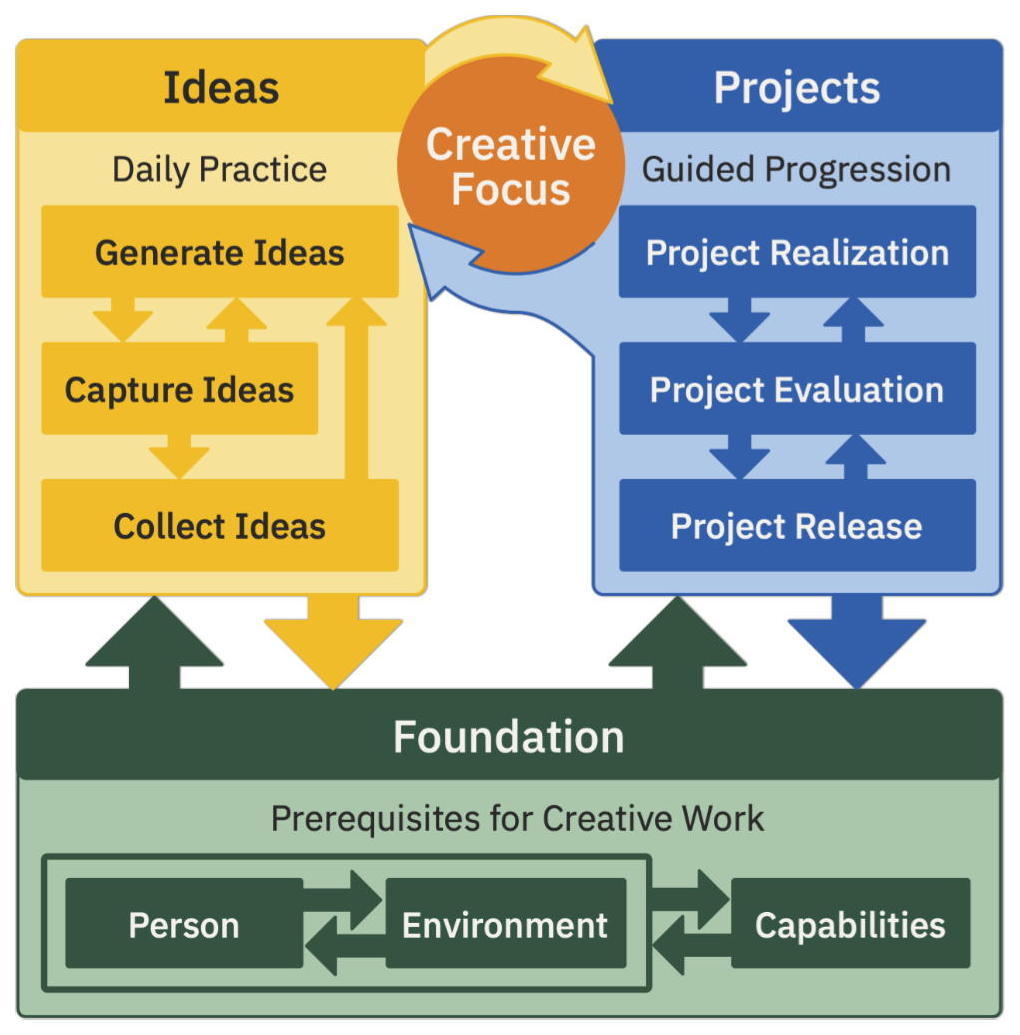
Figure 1: Organizing Creativity Framework.
This framework may seem abstract at first, but it captures the structure of your own creative process:
- Foundation: As a person, you have certain attributes, interests, skills, limits, and tolerances, and you want to do something with them. These both influence and are influenced by your environment — your infrastructure, tools, social support, and what the environment affords or discourages. Together, person and environment determine your capabilities — what can be executed or developed at a given time.
- Ideas: To deliberately create something new and useful — that is, to be creative — you need ideas. And because creative projects require more than a single idea, ideas have to be generated, captured, or they are forgotten, and collected, i.e., stored in a usable way so they are accessible when needed.
- Creative Focus: Because time and energy are limited, creative focus has to be directed — long-term (Creative Direction) and toward specific projects (Creative Energy). Sometimes several possible projects have potential, which requires prioritization and a decision to commit (Creative Commitment).
- Projects: Once you begin realizing a project, you will usually need additional ideas, because there is a gap between imagination and reality and unforeseen problems arise. Thus, projects link back to idea generation. The project itself is evaluated — by yourself and often by others — in order to improve it. And then, if it is good enough, it is released and made public. That release can provide further information and inform future iterations and projects.
Thus, the framework is not something new that you build or impose. It is something you can map onto what you already do. Because it focuses on the invariant aspects of creativity — the topology — it is universal. The stakes and scopes may differ enormously, and the concrete forms vary, but the areas and elements remain the same. This makes your creative process visible across domains, whether in scientific discovery, art, engineering, design, relationships, or everyday creativity (see Table 1 and Table 2).
| Science | Art | Relationship | Everyday | |
|---|---|---|---|---|
| Examples | research in physics or psychology | painting, sculpture | a romantic evening, a trip together | a flower bouquet, rearranging a room |
| Foundation | ||||
| Person | interest in a domain, subject knowledge, research skill | artistic vision, aesthetic sensibility, craft skill | interest in the partner, social attunement, relational knowledge | desire to improve everyday life, aesthetic sensibility, practical judgment |
| Environment | access to literature, equipment, funding, institutional support | materials, workspace, time, artistic milieu | partner availability, shared history, time, budget, setting | available materials, domestic setting, time, season, access to objects or nature |
| Capabilities | can formulate questions, design studies, run analyses, and learn what is needed | can work with materials, technique, composition, and revision | can plan, coordinate, anticipate preferences, and adjust in real time | can arrange, combine, adapt, and execute with available means |
| Ideas | ||||
| Generate | generate research questions, hypotheses, and possible methods | generate motifs, forms, themes, or variations | generate ideas for gestures, activities, timing, and atmosphere | generate ideas for arrangements, improvements, or combinations |
| Capture | notes, lab book, drafts, annotated papers | sketches, notes, studies, fragments | notes, messages to self, reminders | quick notes, photos, memory aids, rough trials |
| Collect | organized notes, literature system, outlines, data, conceptual clusters | sketchbooks, reference folders, theme-based collections | saved ideas, plans, preferences, remembered successes | remembered patterns, saved examples, reusable combinations |
Table 1: First part of the framework applied to different domains, with examples in each cell. Not as models to follow, but as illustrations of how the same structure appears in very different contexts.
| Science | Art | Relationship | Everyday | |
|---|---|---|---|---|
| Creative Focus | ||||
| Direction | aspiring to contribute to a domain through deliberate project choice and sustained work | following a particular artistic aspiration through selected projects and sustained work | being dedicated to the relationship and deliberate about how it is shaped and where it is going | aspiring to improve everyday life, even in small things, through frequent small projects |
| Energy | concentrating on the most promising question while keeping other lines of inquiry available | developing the most promising work or theme while sketching others | shaping the most fitting gesture, event, or next step while keeping alternatives in reserve | developing the most fitting idea while remaining able to adapt |
| Commitment | committing to the study or paper with the best expected contribution | committing to the work that best realizes the artistic aim | deciding on the concrete plan and carrying it out | deciding on the arrangement to execute now |
| Projects | ||||
| Realize | literature review, study design, experiments, analysis, writing | sketching, drafting, revising, refining technique and form | planning, preparing, coordinating, obtaining what is needed, carrying it out | selecting materials, arranging, adjusting, assembling |
| Evaluate | assess rigor, clarity, novelty, and usefulness; revise accordingly | assess the work against vision, form, and effect; revise accordingly | assess whether it fits the partner, the moment, and the intended effect; adjust locally | assess fit, function, and appearance; adjust the arrangement |
| Release | submit, present, publish | exhibit, present, publish | enact the gesture, event, or surprise | place, use, share, or live with the result |
Table 2: Second part of the framework applied to different domains, with examples in each cell. Not as models to follow, but as illustrations of how the same structure appears in very different contexts.
Throughput
Creative systems behave like flow systems. Ideas enter, attention processes them, and projects leave the system as finished work. A balanced, mostly frictionless creative system is needed in order to achieve high throughput — to deliberately create new and useful things in high quality and quantity. Ideally, most friction should come from the work itself, not from avoidable problems in the system around it.
Because the areas and elements of the framework are connected and also loop back into each other, the creative system is more complicated than a simple linear «input → throughput → output» model. For example, realizing a project usually requires additional ideas, and pursuing an idea may require further skill development. Still, attention, time, and effort enter the system and flow through it. And how well that flow happens determines how well you can create.
Thus, organizing creativity means improving the throughput of ideas into finished creative projects by adjusting the structures that shape the creative system.
Underflow, Optimal Flow, and Overflow
Creative productivity rarely fails because of a simple lack of ideas or a lack of effort. More often, it fails because throughput is lost or causes problems somewhere in the system. This restriction is a structural flow failure — either an underflow or an overflow.
Examples of underflow include droughts, e.g., when time for ideation is not defended and idea generation is stifled, leakages, e.g., when ideas never properly enter the system because they are not captured and are therefore forgotten, and misrouting, e.g., when ideas are generated and captured, but do not support the project that is currently being realized.
Examples of overflow include floods, e.g., when ideas enter faster than the work can progress, fragmentations,1 e.g., having too many projects at the same time spreads attention too thin, or congestions, e.g., when the sheer abundance of possible ideas prevents projects from being completed.
Because the areas of the creative system — foundation, ideas, focus, and projects — are connected to each other, an underflow or overflow in one part has consequences for the overall creative output. For example, you may want to realize projects but still lack usable ideas — not because you do not generate them, but because capturing them is too effortful to preserve them reliably. Or you may generate ideas faster than the system can process them, making it difficult to decide which projects to start.
These misalignments produce typical failure patterns that can be observed and then used to design interventions (see Table 3).
| Failure Mode & Symptoms | Examples of Interventions |
|---|---|
| Underflow | |
| Drought «I lack ideas.» «I do not know what to create.» «I feel uninspired.» «I feel creatively depleted.» |
Defend time for ideation; increase exposure to relevant material; create conditions for inspiration and insight; restore recovery and fallow time. |
| Leakage «I had a good idea and lost it.» «Ideas come when I cannot use them.» «I vaguely remember ideas but cannot reconstruct them.» «I capture only occasionally.» |
Make capture frictionless; keep capture tools always available; use a reliable collection inbox; build a routine for transferring captures into a usable collection. |
| Misrouting «I have many ideas, but not for the project I need.» «I get lost in side issues.» «My scope keeps expanding.» «My effort goes into the wrong level of the problem.» |
Tighten constraints; clarify the current project aim; direct ideation toward the live problem; make the core project more salient than peripheral ones. |
| Overflow | |
| Flood «I generate more ideas than I can handle.» «There are too many options.» «My collection is overflowing.» «It all feels like too much.» |
Limit intake; reduce active exploration; prioritize ruthlessly; separate core, central, and peripheral projects; move excess material into cold storage. |
| Fragmentation «I am always busy, but progress is slow.» «I keep switching files or projects.» «Each session begins with deciding what to do.» «I constantly change direction.» |
Reduce active projects; define work blocks in advance; improve continuation cues; protect the core project from interruption; make next actions obvious. |
| Congestion «I start many things but rarely finish them.» «Projects accumulate without release.» «Work feels endless.» «My notes are full of possible projects.» (Often overlaps with System Drag) |
Add scope limits; define release criteria; define kill criteria; shorten project cycles; create a release structure that moves work out of the system. |
Table 3: Frequent Failure Modes, Symptoms and Examples of Possible Interventions
You can determine where the flow slows down or accumulates, adjust the system accordingly, and observe the effects. In contrast, simply targeting fashionable issues such as motivation or inspiration may either waste energy — for example, if the real issue is leakage — or make the problem worse, e.g., if the system is already bottlenecked elsewhere.
System Drag
Beyond underflow and overflow, dead weight in the system is also a frequent problem.
Every creative system accumulates inventory — material that has not yet become finished output, e.g., captured ideas, research notes, sketches, drafts, partially developed concepts, or unfinished projects. Even started but not completed changes on the foundation level belong here — for example, beginning to improve the workspace or starting to learn a skill.
Some of this inventory is normal and necessary. You might have dozens or hundreds of ideas, but only a few projects that are actively pursued. This inventory provides the building blocks for creative work — raw material, seeds for future projects, or work in progress.
However, this inventory can become dead weight and create structural pressure in the system. For example, starting to learn too many skills without consistent follow-through can produce guilt and stress. Collected ideas that are hoarded but never used turn the collection into a graveyard. Too many projects that were started but neither released nor killed create too many open loops, increase cognitive load, and impede progress on the active work.
As a result, the system begins to feel confusing, unfocused, stifling, or sluggish. You may feel overwhelmed by dead ideas, unfinished notes, abandoned work, and everything you could or should be doing. The issue here is not motivation, but excess dead weight — like trying to run a marathon with a backpack full of stones.
Because systems accumulate this weight automatically over time, this dead weight has to be reset periodically in order to restore flow. The reset removes the dead weight while preserving the system. Some ideas and projects remain and continue to serve as inspiration for future work, but no longer burden the active system.
A reset does not mean throwing ideas or projects away. It usually means moving them into cold storage, where they no longer interfere with the current creative process. For example, in a less salient part of the idea collection. While it can hurt to freeze good ideas or promising projects, doing so restores flow and clarity and prevents an effective system from becoming a graveyard (see Collecting Ideas on page 129 and Creative Energy on page 165 for more).
Advantages and Risks
This approach allows you to build on what you already have and see in practice what works and what does not. And not only locally — e.g., whether you capture more ideas — but globally: Do the changes actually improve the quality and quantity of your creative work?
Keeping this end goal in mind prevents over-organization. Organization is crucial, but it can easily become a displacement behavior. Tools, methods, or infrastructure become enjoyable to optimize. This may even improve a local aspect of the system, but still have no effect — or even a negative effect — on the overall creative output. For example, endlessly optimizing an idea collection may improve collecting, but take time away from actually realizing creative projects.
However, this approach is not without risks.
Even the best system cannot guarantee success, because successful creative work depends on many variables. What is possible, however, is to increase the likelihood of successful projects. By focusing on process quality rather than guaranteed outcomes, you improve the quality of your decisions while working. And over multiple projects, increasing the likelihood of success is often enough.2
The framework itself is abstract. That allows it to be applied to any kind of creative work, but it also makes concrete suggestions more difficult. For that reason, the Supplemental Materials (see page 47) — especially the ▯ Integration Worksheet — provide additional support for implementation.
This approach may also seem «cold» or «mechanistic», and in one sense it is. Some people resist organization because they regard spontaneous inspiration as essential to their process. Others fear that once they start thinking about how they do creative work, they will lose the ability to do it — like asking a centipede how it moves its legs. But having «no» organization usually means having accidental, unconscious, or poor organization — often imposed by the environment. And while inspiration cannot be designed directly, it is possible to create conditions that make it more likely. So if these concerns apply to you, you may find that improving your creative system leaves you with more free-spirited inspiration and less noise.
So let us make things concrete by applying this creative system.
Endnotes
- Fragmentation is an overflow problem, as the issue is an overflow of something, e.g., projects, which then reduces the attention each project gets. While it reduces the pressure, there is an overflow of something that is the reason. ↩
- Cialdini (2016) put it well when talking about persuasion: «It’s important here to take note of my choice of the word likelihood, which reflects an inescapable reality of operating in the realm of human behavior — claims of certainties in that province are laughable. No persuasive practice is going to work for sure whenever it is applied. Yet there are approaches that can consistently heighten the probability of agreement. And that is enough. A meaningful increase in those odds is enough to gain a decisive advantage.» ↩
Supplemental Materials
OC3 Navi
- Home | Front Matter
- Why Organize Creativity
- Creativity as a System: 1. Creativity, 2. Creative System, 3. Application, Meta: Supplemental Materials
- Framework: Foundation: 4. Person, 5. Environment, 6. Capabilities, Meta: Tools
- Framework: Ideas: 7. Generating Ideas, 8. Capturing Ideas, 9. Collecting Ideas
- Framework: Creative Focus: 10. Creative Direction, 11. Creative Energy, 12. Creative Commitment
- Framework: Projects: 13. Project Realization, 14. Project Evaluation, 15. Project Release
- Back Matter: Afterword by the Author, Afterword by AI, Sources and Foundations, References, About the Author, Feedback and Saying Thanks, Glossary, Appendix