Thinking Differently About Lectures: Sandel’s Justice Lecture at Harvard

What I am going to talk about has absolutely no practical value. Once you accept that fact it allows you to have a more open view of things.
Paul Dietz, in introduction to a lecture in algorithms class

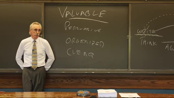
I’m currently participating in a course about teaching at the university level. During the course today, participants referred to the limited interaction that is possible in lectures (compared to seminars). It reminded me of the “Justice” lectures by Michael Sandel at Harvard and an old blog posting I wrote in another (currently offline) blog. I find Sandel’s “presentation” style very inspiring (albeit sometimes taxing) and a creative solution for dealing with large classes. It’s a little bit off-topic for this blog, but I would relate it to conveying ideas to large audiences.

Here’s his first lecture as an example, with an description about his style below:

Sandel asks the question “What’s the right thing to do?” and uses contemporary examples to illustrate different moral positions by philosophers like Bentham, Mill, Kant, Aristotle, Rawls. His low-key “presentation style” (a mixture of lecturing and highly-but-indirectly structured discussion) is remarkable.

After watching the twelve episodes and another presentation to the same topic I found the following attributes to be very interesting:

Well-Timed speech

He speaks slowly and makes pauses in the right moments. This gives students time to think about the sentences. He also repeats what students have said in his own words, which gives him and others time to think about it.

Suiting movements

Similar to his low-key speech he walks around slowly when he is not behind the lectern. This gives him some dynamic but is in accordance to the topic of the course.

Shows everyday relevance of the issues

He continuously makes connections to every day life and makes clear what is at stake in philosophy. This is necessary to allow participation because students can imagine themselves in these situations and makes the philosophical positions relevant and concrete instead of purely abstract. He continuously links concrete examples to abstract positions and vice versa, allowing students to see it in abstract, general and concrete, special cases.

Encourages participation

There are several strategies used to encourage participation:

  • He makes it clear that the topics can be discussed by the students. For example, in the first lecture when he dismisses skepticism and throughout the course when he lets the students challenge their positions. He also mentions when philosophers give strange reasons and shows them that they can be criticized.
  • He asks for the names of the contributors and mentions them when he refers to the same arguments. This brings the names of the students in the same line as the philosophers they are analyzing and shows them that the philosophers can be criticized by them.
  • He asks them what they think personally, “how you would rule”, without having to resort to laws. When they say what others might think he returns them to their own opinion by asking: “But what do you think?” or by finding out via a quick vote.
  • He reinforces the students speaking by paraverbal signals (e.g., nods) and verbally (“right”, “yes”). He continuously gives the feedback that he understands what they say, but not necessarily that he agrees with their opinion. If a student has problems stating his opinion, he supports them.
  • He reinforces students for each contribution by thanking them and — in some cases — recognizing that their contribution was not easy because it dealt with difficult moral positions (like agreeing to eat a crew mate). For example, he uses sentences like “You did well. It’s a hard question.” or “Brave answer. Thank you.”. He also thanks them for questions (e.g., “interesting you should ask …”, “interesting suggestion”).
  • He also tells them when they divert from philosophers but tells them they might be right and the philosophers might be wrong. For example, in the presentation at Duke Sanford School: “That makes sense [pause] but it’s not Aristoteles reason.” “Argh” “That’s all right. You might be right and he might be wrong. We’ll see.” He also says when something is partially right (“reason is deserving but …”).
  • If there is a vote, he raises his hand every time which could be interpreted as voting for it and might encourage others to stand by their opinion and raise their hands. He also makes it clear that the vote is not just for fun (or so that we have done something “interactive”) but summarizes the results, often interprets what this means, and refers to it later in the lecture. Consequently, it actually makes sense for students to participate in the vote. He also notices who raised his hand in an issue and sometimes asks the person later.
  • He also refers the answers students give to other students who have brought a conflicting or similar point earlier (hence he is asking for the name of the person who speaks). While he is still monitoring the discussion and highly structures it, it leaves the students engaged in the discussion because it’s not “lecture – one question – one answer – lecture” but actually a kind of discussion among the students. It has the further beneficial effect that he does not criticize them himself (which would probably reduce further participation) but lets the students being criticized by their peers.
  • Even if a student completely smashes what he was aiming for, he takes it with humor, concedes the point and moves on (“interesting idea except that it wrecked the philosophical point”). It shows pretty clearly that students can participate even if they say something the lecturer does not like.

Minding the overall course of the discussion, lecture, course

The whole discussion serves the goal of the course (as it should) and is structured by him to achieve this goal.

  • While the students are encouraged to participate it is neither participation without consequence nor without direction. If a student mentions something he was aiming for he reinforces the direction (a “Good point. Who has another reason …” compared to an “Good. Who has an answer for …”). He also stops students immediately when they brought the point he was aiming at. If the discussion is not moving in the right direction, he asks specific questions to further sharpen the issue and lead to the points he was aiming at.
  • Students bring the philosophical points and he uses their positions to illustrate these points more formally. It looks like he has a roadmap in mind, but instead of driving on a superhighway from A to B he lets students explore the territory and gives (gentle) nudges to make sure they find the landmarks. This is especially noticeable when he moves the discussion on a meta level and describes how the discussion evolved and what it means in the context of the philosopher discussed.
  • He also connects the different lectures and gives a short recap what was doe the last time, including mentioning the results of votes or the positions of students he names. It is clear for the students that the course is going somewhere.
  • I think the main point he makes regarding his course is that philosophical questions can and should be discussed and not left to non-state organizations like churches. And he achieves this point well — he summarizes his opinion in the last presentation and shows the students that they have done so during the whole semester showing that it can be done, and should be done.

Keeps the discussion personally relevant but in a personal distance

Given that he makes the philosophical positions personally relevant he also has to make sure that students keep a certain emotional distance in the discussion (e.g., to avoid ad hominem arguments). This was very obvious when one student asked another whether he had ever engaged in masturbation. He intervened and asked her to make the point in the third person. But also in earlier discussions, e.g., when one student argued against Affirmative Action programs for Blacks but for Legacy Admissions to Harvard, he did not ask the student whether he himself was only accepted to Harvard due to Legacy Admission.

I think the only criticism regarding the lectures is that it becomes harder to follow when he is reading at the lectern. Standing freely in front of the students and arguing for certain points he does extremely well, but I have yet to see and hear a lecturer who can hold my attention while reading a text behind a lectern.

By the way, the technical quality of the videos is also remarkable, given that they were made for TV. The video is crystal clear (in HQ), the sound quality excellent, and the camera work professional and well framed/cut (although I would be very angry if a camera man would be filming my lecture notes). I think the only criticism I have regarding this point is that it looks too flashy (especially the teasers) — like a report you would see on TV (for which it was for). It might suggest that the lecture is “only” entertainment, something videos are likely to suggest (cf. Salomon, 1984). It actually helped me not to look on the screen too much.

All in all, very interesting, very stimulating and a good example that even formal education in philosophy does not have to be boring. You can find the lectures here:

Literature

Salomon, G. (1984). Television is “easy” and print is “tough”: The differential investment of mental effort in learning as a function of perceptions and attributions. Journal of Educational Psychology, 78(4), 647-658.

Inspiration: Music

“I have no idea to this day what those two Italian ladies were singing about. Truth is, I don’t want to know. Some things are better left unsaid. I’d like to think they were singing about something so beautiful it can’t expressed in words, and it makes your heart ache because of it. I tell you, those voices soared higher and farther than anybody in a grey place dares to dream. It was as if some beautiful bird had flapped into our drab little cage and made these walls dissolve away, and for the briefest of moments, every last man in Shawshank felt free.”
Red, a prisoner in Shawshank, hearing “Canzonetta Sull’Aria” (The Marriage of Figaro) over the prison speakers, in “The Shawshank Redemption”

After the more technical tips in the last postings, now for something completely different. ;-) Some videos showing the beauty of music — and what professionals can do with it and YouTube. Some are rather old, but still watchable.

Lara6683: Tomb Raider Theme

Lara6683-Channel: http://www.youtube.com/user/lara6683

Lara6683/ViolinTay: Morrowind/Skyrim Theme

Lara6683-Channel: http://www.youtube.com/user/lara6683
ViolinTay-Channel: http://www.youtube.com/user/ViolinTay

ViolinTay: Boondock Saints Theme Song Violin (The Blood of Cu Chulainn)

ViolinTay-Channel: http://www.youtube.com/user/ViolinTay

Walk Off The Earth: Somebody That I Used to Know

Walk Off The Earth-Channel: http://www.youtube.com/user/walkofftheearth

Walk off the Earth + Roomie: The Edge of Glory (Lady Gaga)

Walk Off The Earth-Channel: http://www.youtube.com/user/walkofftheearth

OKGo: Here It Goes Again

OKGo Channel: http://www.youtube.com/user/OkGo

FunTwo: “Canon Rock”

Channel: http://www.youtube.com/user/funtwoHimself

What do you live for?

“It’s easy to find something worth dying for. Do you have anything worth living for?”
Lorien in Babylon 5: “Whatever Happened to Mr. Garibaldi?”

I’m currently working on the second edition of my “Organizing Creativity” book. It is still about half the amount of pages as the first edition, but new topics do get in. One — rather accidental — topic is related to setting priorities. If you are creative, chances are, there are different projects you can work on, and there is a lot more to do than you have time in your life. So there are a few lines on “having to many interests” (and how to deal with them) and about “Setting Priorities” (for which an idea collection is actually a great help — and very soothing). However, I also went a step further up — and that question is “What do you live for?”.

The longer I have spend in my working life, the more I notice that — at least today and in Western society — it is meaning in our life that we need, that drives us, that motivates us. A vision of something to accomplish, a personal mission to achieve (or at least contribute to) this vision, which tells you what kind of knowledge and skills you need, and how to evaluate whether you are successful in achieving it.

Or to put in a diagram (very simplified, of course, your knowledge and skills also define your vision and mission):

vision-to-outcome-small

Thing is, everyone has to find for him- or herself what their vision and mission is. And what they can contribute to it. But whereas this might be difficult, the good thing is, you can define it for yourself. It is much more difficult in the work setting, where others have to set this vision and define the organizations mission. Many organizations do not do it, or make it transparent, or make it believable (and the only way to do it is to really believe in it). And if this is missing people stay below their potential. I think this is one reason why so many people like to be creative in their leisure time, because then they can at least contribute to one vision, to make the world a little better for others.

But even then, the question remains: Your time here is limited, so, what do you live for?

Why Complete Freedom Is Not a Good Idea

“I’m free. Free of rules and reports, free of this life.”
“Free of life. Got another name for that – dead.”
Buffy, after becoming invisible, and Spike in “Buffy – The Vampire Slayer”

One thing that I always found strange is that some people wish to be completely free in what they do to be really creative. Not being forced to develop things for others, being forced to adhere to deadlines, or create remittance work.

It sounds strange, but I think that as much as we might wish complete freedom, it can actually be very bad for creativity. This might sound like betrayal if you are working in tight constraints, but consider it this way: if you had complete freedom, it would also mean that …

… no one gives you any feedback or issues any desires of things that might be interesting,

… no one cares what you do, because otherwise they would influence you, and

… you would not learn from anyone, because they would also influence you.

And without this, how can you develop yourself? So, in this regard perhaps some constraints, some deadlines, and some vested interest by others isn’t all bad.

Recommendation: How to Give an Academic Talk

The lecturer should give the audience full reason to believe
that all his powers have been exerted for their pleasure and instruction.
Michael Faraday

Yesterday I recommended a short text by Paul N. Edwards (School of Information University of Michigan) called How to Read a Book (v4.0). Looking on his essays page, there is also an excellent text about How to Give an Academic Talk, v4.0. It is a very good summary of the typical mistakes people make in giving academic talks. Personally, I usually recommend these books by Reynolds to my students and highly encourage them to watch some TEDtalks for brilliant examples of very good orators. I’m going to include this text as well.

BTW, he recommends at one point recording yourself — did you know that many notebooks have a built in camera that can be used for this, or that your cellphone/smartphone will probably also do a decent job in doing so? I remember a time when I took a presentation course at the local adult education center and it was something special to be recorded by a video camera (on tape!) when giving a presentation. Today we have all these tools to improve ourselves — why not use them?

Highly recommended — Edwards, P. N. (2010). How to Give an Academic Talk.

What is good PhD advisory?

Keep away from people who try to belittle your ambitions. Small people always do that, but the really great make you feel that you, too, can become great.
Mark Twain

Looking back at the advice I did get, I didn’t get, I wish I had gotten, I think that a good adviser, when giving advise, looks at:

  • who the young scientist is (i.e., where she is in her career, what her attributes are, her character, strengths and weaknesses, etc.),
  • how the field is in the area this person wants to be successful in (i.e., the specific research community),
  • the possible advantages and (more relevant) the problems this specific young scientist will have if she wants to be successful in this specific field,
  • (ideally) possible ways to improve the persons chances, e.g., strengthen the positive aspects and overcome the problems, and
  • a way to convey valuable feedback to the young scientist in a way that the young scientist can accept this feedback.

Personally, Andy van Dam, who was the mentor of Randy Pausch exemplifies this kind of mentorship for me. He said (as quoted in the wonderful book: “Really Achieving Your Childhood Dreams” by Randy Pausch):

“Randy, it’s such a shame that people perceive you as being so arrogant, because it’s going to limit what you’re going to be able to accomplish in life.”
Andy van Dam to Randy Pausch

Randy Pausch commented this feedback as perfectly worded, because he did not say: “Randy, you’re being a jerk.”, but he identified the core problem of the person in the field he wanted to work in, and he conveyed the message in a way his student could accept.

This kind of advice is very, very rare in my opinion, and after having taught students for a few semesters and some student assistants, also very, very hard. But it is also very, very important if you want to improve yourself.

Note: This posting replaces a previous one, in which I essentially said the same thing, but which was also very emotional and angry. Looking back, I can see why I wrote it is that tone, and seeing it now I can see that it does not fit to person who I like to be(come).

The Images That Didn’t Make It

A Physician can bury his mistakes,
an architect can only advise his clients to plant vines.
Frank Lloyd Wright

It’s easy to see artists as perfect, because the works you see — especially the works from commercially very successful artists — are only the refined and selected ‘best works’. You do not see the sketches, the mishaps, the blunders — or even all the slight variations that dot the way to each successful artwork.

So it’s nice to see that Slate shows “Contact Sheets” today as a topic, allowing you to have a look at the contact sheets photographers made and the pictures that were finally selected. And some of them are classic photographs most people would recognize.

If you ever wondered whether you are the only one who has to go through hundred of photos to get the one exceptional one, don’t despair. Whereas professional and well-known photographers might produce less “trash-bin material”, many of their brilliant photos were that one exceptional photo in a row. That is was there is exceptional enough.

What Art Should Do: Touching You Emotionally

Important: I did NOT create this video, I just stumbled upon it, and as linking was enabled on YouTube, I linked it here. The creator (Ryan J. Woodward) and team involved is shown at the end of the video. Just, just, just brilliant!

Just a quick intermezzo as I stumbled over a video that … well, look for yourself:

Ryan J. Woodward, the artist who did the video, gives some background information on:

Highly Recommended!

Note: After watching the interviews … that’s a hell of a way to deal with a midlife crisis — other people would have bought a Porsche. ;-)

This is not a game for me

“Son, where did you go to school? If I were you, I’d write them and get my fucking money back.”
Dimitri “Jimmie” Viner, in discussions with his flight test engineers

A while ago I had an interesting conversation with a young woman who works as musician for the US military. We found some interesting connections between science and music, but what really struck me was how she got a music teacher fired for not helping her to become better.

Yup — and she was right.

When she found out that the high-credentials teacher who was giving the course for aspiring professional musicians could or would not give her more help than just some standard stuff you could say to every interpretation of the music piece, she first tired to find better teachers outside of the music school. When this failed, because the school did not want to cover the expenses, she switched to a course that was done by a young teacher. This teacher was not as experienced, did not have all those credentials the other teacher had, and she usually taught the students who did not want to become professionals, but her feedback was much more valuable than that of the high-credentials teacher.

Now, when a really good musician changes courses to an apparently inferior teacher this starts a lot of talk, and by the start of the next semester, all the students of the high-credentials teacher wanted to switch to the young teacher. The school was forced to draw lots who might actually make the switch. After that semester, the high credentials teacher took a sabbatical.

While it may sound harsh and brutal to get a teacher fired this way, it was the best choice. Like she said: “This is not a game for me” — it was about preparing her for the future, allowing her to be successful as a musician. A teacher who gives only the same standard advice for all students, who does not allow her to become better, should not be tolerated.

It was the right decision and I wish more people would act the same.

Steve Jobs

“People think focus means saying yes to the thing you’ve got to focus on. But that’s not what it means at all. It means saying no to the hundred other good ideas that there are. You have to pick carefully.”
Steve Jobs

It’s been a little more than two weeks since Steve Jobs died. Apple did what it does best and gave him an Apple-style simple but beautiful obituary notice on their home page (well, until the next product was unveiled, which probably would have made him smile). It’s sad when someone like him dies … he shaped the future.

I can highly recommend his 2005 Stanford Commencement Address:

and this page about a few inspirational quotes of Steve Jobs.

Farewell, Steve Jobs.