Archive

Posts Tagged ‘impact’

Draft Version of Organizing Creativity 2nd Edition

January 11th, 2012 No comments

Hey everyone,

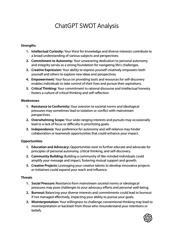
I’m still working on the second edition of Organizing Creativity.

It takes longer than expected (it is a spare time project), so, I’m putting the current draft version online.

sample_page_oc2_0

It contains the content of the wiki I had here, so I have removed it.

Like I said, it’s a rough draft — some parts are (almost) finished, others are missing in part or completely — but to make the best of the longer work process, posting it online gives me the opportunity to ask for feedback. This is your chance to influence the final version. What do you think of the content and/or the layout? Any suggestions for improvement? I’d like to hear them. Drop me a line at danwessel@organizingcreativity.com or write a comment.

All the best

Daniel

Recommendation: How to Give an Academic Talk

January 6th, 2012 No comments

The lecturer should give the audience full reason to believe
that all his powers have been exerted for their pleasure and instruction.
Michael Faraday

Yesterday I recommended a short text by Paul N. Edwards (School of Information University of Michigan) called How to Read a Book (v4.0). Looking on his essays page, there is also an excellent text about How to Give an Academic Talk, v4.0. It is a very good summary of the typical mistakes people make in giving academic talks. Personally, I usually recommend these books by Reynolds to my students and highly encourage them to watch some TEDtalks for brilliant examples of very good orators. I’m going to include this text as well.

BTW, he recommends at one point recording yourself — did you know that many notebooks have a built in camera that can be used for this, or that your cellphone/smartphone will probably also do a decent job in doing so? I remember a time when I took a presentation course at the local adult education center and it was something special to be recorded by a video camera (on tape!) when giving a presentation. Today we have all these tools to improve ourselves — why not use them?

Highly recommended — Edwards, P. N. (2010). How to Give an Academic Talk.

What is good PhD advisory?

January 4th, 2012 No comments

Keep away from people who try to belittle your ambitions. Small people always do that, but the really great make you feel that you, too, can become great.
Mark Twain

Looking back at the advice I did get, I didn’t get, I wish I had gotten, I think that a good adviser, when giving advise, looks at:

  • who the young scientist is (i.e., where she is in her career, what her attributes are, her character, strengths and weaknesses, etc.),
  • how the field is in the area this person wants to be successful in (i.e., the specific research community),
  • the possible advantages and (more relevant) the problems this specific young scientist will have if she wants to be successful in this specific field,
  • (ideally) possible ways to improve the persons chances, e.g., strengthen the positive aspects and overcome the problems, and
  • a way to convey valuable feedback to the young scientist in a way that the young scientist can accept this feedback.

Personally, Andy van Dam, who was the mentor of Randy Pausch exemplifies this kind of mentorship for me. He said (as quoted in the wonderful book: “Really Achieving Your Childhood Dreams” by Randy Pausch):

“Randy, it’s such a shame that people perceive you as being so arrogant, because it’s going to limit what you’re going to be able to accomplish in life.”
Andy van Dam to Randy Pausch

Randy Pausch commented this feedback as perfectly worded, because he did not say: “Randy, you’re being a jerk.”, but he identified the core problem of the person in the field he wanted to work in, and he conveyed the message in a way his student could accept.

This kind of advice is very, very rare in my opinion, and after having taught students for a few semesters and some student assistants, also very, very hard. But it is also very, very important if you want to improve yourself.

Note: This posting replaces a previous one, in which I essentially said the same thing, but which was also very emotional and angry. Looking back, I can see why I wrote it is that tone, and seeing it now I can see that it does not fit to person who I like to be(come).

The Images That Didn’t Make It

December 16th, 2011 No comments

A Physician can bury his mistakes,
an architect can only advise his clients to plant vines.
Frank Lloyd Wright

It’s easy to see artists as perfect, because the works you see — especially the works from commercially very successful artists — are only the refined and selected ‘best works’. You do not see the sketches, the mishaps, the blunders — or even all the slight variations that dot the way to each successful artwork.

So it’s nice to see that Slate shows “Contact Sheets” today as a topic, allowing you to have a look at the contact sheets photographers made and the pictures that were finally selected. And some of them are classic photographs most people would recognize.

If you ever wondered whether you are the only one who has to go through hundred of photos to get the one exceptional one, don’t despair. Whereas professional and well-known photographers might produce less “trash-bin material”, many of their brilliant photos were that one exceptional photo in a row. That is was there is exceptional enough.

What Art Should Do: Touching You Emotionally

November 28th, 2011 No comments

Important: I did NOT create this video, I just stumbled upon it, and as linking was enabled on YouTube, I linked it here. The creator (Ryan J. Woodward) and team involved is shown at the end of the video. Just, just, just brilliant!

Just a quick intermezzo as I stumbled over a video that … well, look for yourself:

Ryan J. Woodward, the artist who did the video, gives some background information on:

Highly Recommended!

Note: After watching the interviews … that’s a hell of a way to deal with a midlife crisis — other people would have bought a Porsche. ;-)

This is not a game for me

November 13th, 2011 No comments

“Son, where did you go to school? If I were you, I’d write them and get my fucking money back.”
Dimitri “Jimmie” Viner, in discussions with his flight test engineers

A while ago I had an interesting conversation with a young woman who works as musician for the US military. We found some interesting connections between science and music, but what really struck me was how she got a music teacher fired for not helping her to become better.

Yup — and she was right.

When she found out that the high-credentials teacher who was giving the course for aspiring professional musicians could or would not give her more help than just some standard stuff you could say to every interpretation of the music piece, she first tired to find better teachers outside of the music school. When this failed, because the school did not want to cover the expenses, she switched to a course that was done by a young teacher. This teacher was not as experienced, did not have all those credentials the other teacher had, and she usually taught the students who did not want to become professionals, but her feedback was much more valuable than that of the high-credentials teacher.

Now, when a really good musician changes courses to an apparently inferior teacher this starts a lot of talk, and by the start of the next semester, all the students of the high-credentials teacher wanted to switch to the young teacher. The school was forced to draw lots who might actually make the switch. After that semester, the high credentials teacher took a sabbatical.

While it may sound harsh and brutal to get a teacher fired this way, it was the best choice. Like she said: “This is not a game for me” — it was about preparing her for the future, allowing her to be successful as a musician. A teacher who gives only the same standard advice for all students, who does not allow her to become better, should not be tolerated.

It was the right decision and I wish more people would act the same.

Steve Jobs

October 21st, 2011 No comments

“People think focus means saying yes to the thing you’ve got to focus on. But that’s not what it means at all. It means saying no to the hundred other good ideas that there are. You have to pick carefully.”
Steve Jobs

It’s been a little more than two weeks since Steve Jobs died. Apple did what it does best and gave him an Apple-style simple but beautiful obituary notice on their home page (well, until the next product was unveiled, which probably would have made him smile). It’s sad when someone like him dies … he shaped the future.

I can highly recommend his 2005 Stanford Commencement Address:

and this page about a few inspirational quotes of Steve Jobs.

Farewell, Steve Jobs.

Poster: Wie organisiert man seine Kreativität? [German]

October 3rd, 2011 5 comments

English Note: This posting is about a poster I did submit to the MinD-Akademie 2011, showing on one (very large) page how one can organize one’s creativity. It was accepted and well received. The poster is in German, but I will do a translation soon. [Update: Translation is finished and available in this posting here.]

MinD-Akademie 2011 Poster

Das Poster zeigt die verschiedenen Punkte die wichtig sind, um Kreativität zu organisieren. Während der Prozess von oben nach unten läuft, ist jeder Punkt auch eine Beschäftigung mit dem Thema (gelbe Pfeile nach oben) und führt entsprechend zu weiteren Ideen (mittige Pfeile nach unten). Auf das Poster oder hier klicken, um das Poster als PDF in DIN-A0 zu sehen (die Bilder selbst sind runterskaliert, so dass die Datei “nur” ca. 7 MB groß ist). Die Datei ist in der Dateigröße reduziert, die Bilder sollten aber trotzdem in druckbarer Qualität sein. Das Poster, das ich ausgestellt hatte, habe ich in Hannover gelassen (vielleicht hat es ja ein nettes Heim gefunden, sonst wurde es halt entsorgt). Ich musste los, habe mein Poster nicht gesehen (oder ich war grad blind) und ich habe mich auch von einigen Leuten nicht (bzw. nicht richtig) verabschieden können (war auch was k.o., auch wenn’s/weil’s riesigen Spaß gemacht hat). Ich hoffe, ich sehe ein paar Personen bald wieder, auch gerne mal zu Besuch in Tübingen, auch wenn ich die Namen grad nicht verfügbar habe (ich denke, ich habe den Networking-Workshop wirklich gebraucht — war gut und eine gute Erinnerung).  Ich wünschte halt, ich hätte mir die Namen notiert, von den Personen, mit denen ich interessante Unterhaltungen geführt hatte (hmm, in der Badewanne eben gab’s eine nette Idee für eine App bzw. die Fortführung einer älteren Idee dazu  … ;-) ).

Literature List: How to organize a scientific work

October 3rd, 2011 No comments

“I took a speed reading course and 
read ‘War and Peace’ in twenty minutes.
It involves Russia.”
Woody Allen

Last weekend, I did a presentation for the MinD-Akademie in Germany with the topic: “The Future of Your Research — How to organize a scientific work?”. It was a lot of fun creating the presentation and even more fun holding it (great audience :-) ). Over the next few days I’m going to put the material online here. As this takes a while, here the cited literature:

Science in General and Advisers/Colleagues

  • Cham’s “PhD Comics”: http://www.phdcomics.com/comics.php
    I could have done the whole presentation with PhD Comics, but no one would have believed that they actually describe “real” situations (“real” because it’s a little over the top, but always with a nugget of gold). Great to get a humorous view on academia.
  • Sternberg’s “Psychology 101½”: Sternberg, R. J. (2003). Psychology 101 1/2 The Unspoken Rules for Success in Academia. Washington, DC: APA.
    A very good book by a distinguished professor about life in academia. While written with psychology in mind (he is psychologist), some aspects can probably be applied to other domains.
  • Pausch’s “Last Lecture”
(Video & Book): Pausch, R. (2008). Really Achieving Your Childhood Dreams. New York: Hyperion. [Video here on YouTube]
    A brilliant presentation about a person’s life in academia (and in general) — it shows what you can accomplish and what is needed. For all who think that a job in academia is more than just making money to life by (badly in many cases).
  • Schwartz’s “The importance of stupidity in scientific research”: Schwartz, M. A. (2008). The importance of stupidity in scientific research. Journal of Cell Science, 121, 1771. Available at http://jcs.biologists.org/cgi/content/full/121/11/1771
    A one page article about the necessity of feeling stupid while doing research. Should be required reading by every PhD student just to get the “but I did study it, why don’t I know the answer in advance” out of one’s mind.
  • Patterson’s “Your Students Are Your Legacy”: Patterson, D. A. (2009). Your Students Are Your Legacy. Communications of the ACM, 32(3), 30-33. doi:10.1145/1467247.1467259
    A brilliant argument for good advisory — and what makes good advisory. Should be required reading for everyone who advises students.
  • Schmidt & Richter’s Artikel von 2008 und 2009: Schmidt, B., & Richter, A. (2008). Unterstützender Mentor oder abwesender Aufgabenverteiler? – Eine qualitative Interviewstudie zum Führungshandeln von Professorinnen und Professoren aus der Sicht von Promovierenden. Beiträge zur Hochschulforschung, 30(4), 34-58. und Schmidt, B., & Richter, A. (2009). Zwischen Laissez-Faire, Autokratie und Kooperation: Führungsstile von Professorinnen und Professoren. Beiträge zur Hochschulforschung, 31(4), 8-35.
    Both articles are in German but they are very interesting — more information on them in a posting about them.

Finding a Topic and Planning the Research

  • Perry’s Criteria for a good dissertation topic: Perry, C. (1998). A structured approach to presenting theses. Available online at http://www.scu.edu.au/schools/gcm/ar/art/cperry.html
    An excellent text about doing a thesis with some very good points on selecting the right topic.
  • Booth, Colomb, & Williams’ “The Craft of Research”: Booth, W. C., Colomb, G. G., & Williams, J. M. (2003). The Craft of Research. (Second Edition). Chicago: The University of Chicago Press.
    More on the basics of what research is and how to do it — applicable for many domains.
  • Ullman’s “Advising Students for Success”: Ullman, J. D. (2009). Advising Students for Success. Communications of the ACM, 52(3), 34-37.
    Another great text about advisory — with more focus on choosing a relevant topic.

Managing Literature

Capturing and Managing Ideas and Data

Preparing Studies and Analyzing the Data

  • Field’s “Discovering Statistics Using SPSS”: Field, A. (2005). Discovering Statistics Using SPSS (2nd Edition). London: Sage.
    My statistics book was the Bortz (German book) — which was … not that suited to learn what statistics is about and why it is interesting and useful. Field manages to do both en passant — a very well written book and highly recommended.
  • Pallant’s “SPSS Survival Manual”: Pallant, J. (2007). SPSS Survival Manual. McGraw-Hill, Open University Press.
    Everything you need to know to do the standard tests in statistics for psychologists. Looks cheap but is the best practical handbook I know. Very, very useful.
  • Goodwin’s “Research in Psychology”: Goodwin, C. J. (2009). Research in Psychology. Methods and Design. New York: Wiley.
    Good basic text about research.
  • Wright’s “Making friends with your data”: Wright, D. B. (2003). Making friends with your data: Improving how statistics are conducted and reported. British Journal of Educational Psychology, 73, 123-136.
    Something every researcher should know — very interesting text.
  • example for a “strange” but very valuable source: Froman, R. D. (2001). Elements to Consider in Planning the Use of Factor Analysis. Southern Online Journal of Nursing Research, 2(5). Retrieved January 9, 2009, from http://www.snrs.org/ publications/SOJNR_articles/iss05vol02.pdf.

Writing

  • Silvia’s “How to Write a Lot”: Silvia, P. J. (2007). How to Write a Lot. Washington D.C.: APA.
    Read this to avoid delaying your writing. A brilliant text that smashes the typical excuses of why not to write and gives very useful hints to write.
  • Alley’s “The Craft of Scientific Writing”: Alley, M. (1996). The Craft of Scientific Writing (3rd Edition). New York: Springer.
    The best text I know of regarding the criteria for scientific writing and a very convincing text that technical writing (e.g., all research papers) is craft, not art, i.e., you need to get your facts straight, not divine inspiration.
  • Bem’s “Writing the Empirical Journal Article”: Bem, D. J. (1987). Writing the empirical journal article. In M. P. Zanna & J. M. Darley (Eds.), The compleat academic: A practical guide for the beginning social scientist (pp. 171-201). New York: Random House.
    Can be found online in a different version (which I did read). The standard text for psychologists working in research.
  • Yaffe’s “How to Generate Reader Interest in What You Write”: Yaffe, P. (2009). How to Generate Reader Interest in What You Write. ACM Ubiquity, 10(7).
    An interesting text to capture the reader.
  • Lamott’s “bird by bird”: Lamott, A. (1994). bird by bird. New York: Anchor Books.
    A very good book about (fictional) writing, but with helpful hints for academic/technical writing as well — esp. to write a “shitty first draft”, you can always improve it later.
  • Academic Phrasebank: http://www.phrasebank.manchester.ac.uk
    If reading articles does not give you the necessary vocabulary or you struggle with the right phrases, this site will help.

Reviews

  • Trafimow & Rice: Trafimow, D., & Rice, S. (2009). What If Social Scientists Had Reviewed Great Scientific Works of the Past? Perspectives on Psychological Science, 4(1), 65-78. DOI: 10.1111/j.1745-6924.2009.01107.x
    A brilliant article about how tough and irrational the peer review process is in the social sciences. More in this posting or look directly in the article — very humorous and highly recommended.

Presentations

  • Reynolds’ “Presentation Zen” & “The naked presenter”: Reynolds, G. (2008). Presentation Zen: Simple Ideas on Presentation Design and Delivery. Berkeley, CA: New Riders. and Reynolds, G. (2011). The naked presenter. Delivering Powerful Presentations With or Without Slides. Berkeley, CA: New Riders.
    Brilliant books to avoid death by Powerpoint.
  • TED talks: http://www.ted.com
    Great for inspiration — many of the speakers can convey not only their message/the facts but also why they love this topic.

Traffic Plus

August 24th, 2011 No comments

I have written a few postings about DEVONthink (I like this one here most), but it was a metaphor, comparing DEVONthink to the U.S.S. Enterprise that made it into the DEVONthink company blog. Strange … but effective — it lead to an immediate traffic plus:

traffic_plus

It’s great, but also a little bit of bad timing, as I am currently working on the second version of the “Organizing Creativity” book (more concise, more practical, better layout), which will combined by a Wiki (only for information display, not for collaborative editing — it will provide direct access to information without having to sift through chronological blog entries). It think it will be useful and beautiful, but it will likely take me two or three months until it is finished.

So, if you just came via the DEVONthink blog or just dropped by for other reasons, you might find something (more) interesting here in a few months.

Until then, enjoy the entries here — I hope you find something useful for you.